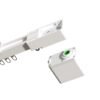
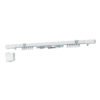
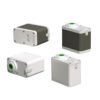
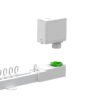
An electric curtain track built around a brushless motor: no brushes to wear, less heat on continuous duty and a quieter drive. The motor couples to the rail as a module, so it can be swapped without taking the track down.
An electric curtain track built around a brushless motor. The profile is the part you see; the drive is the part that decides whether the system is still working in year eight.
Brushless is not a marketing word here. A brushed motor wears its brushes away every time it runs. A brushless motor has no brushes to wear, so the service life is limited by the bearings and the electronics rather than by a consumable — which is the difference between a track you install once and a track you keep coming back to.
Three things, and only one of them is about noise.
What it does not change: the track still has to be straight, level and properly bracketed. A good motor on a bad installation is still a bad installation. What the client notices, in the end, is simply that the electric curtain track stops being audible.
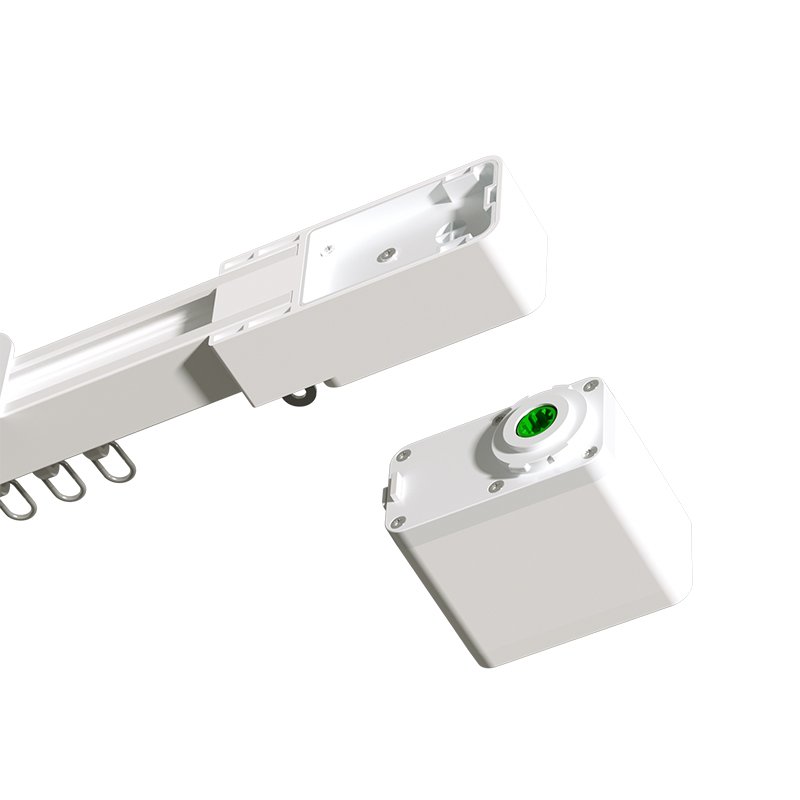
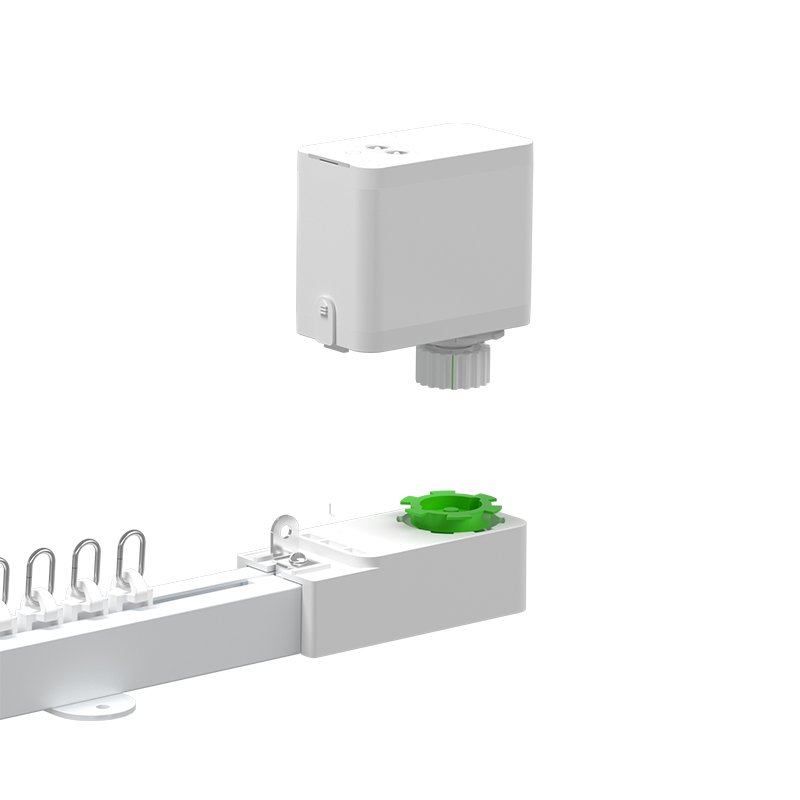
The motor is a module that couples to the end of the profile rather than being sealed into it. It separates from the rail, which means a drive can be serviced or replaced without taking the whole track down off the ceiling.
For a hotel or a commercial installation that is the single most useful thing about the design: a failed unit is a twenty-minute swap in the room, not a contractor visit with ladders and a re-plastered ceiling. For a home it means the track outlives the electronics, which is the correct way round.
Two things push a track past what a light domestic rail can do: length, and the number of layers hanging on it. A long run needs a stiffer profile; interlined drapes, blackout linings and double treatments need a drive that keeps pulling without overheating.
That is where this electric curtain track is aimed. The profile is matched to the span rather than cut from a stock length, and the brushless drive is specified for continuous duty rather than occasional use.
What the track will actually carry is a question about your curtain, not about the catalogue, so it is confirmed per project against the fabric weight and the number of layers rather than published as a single figure.
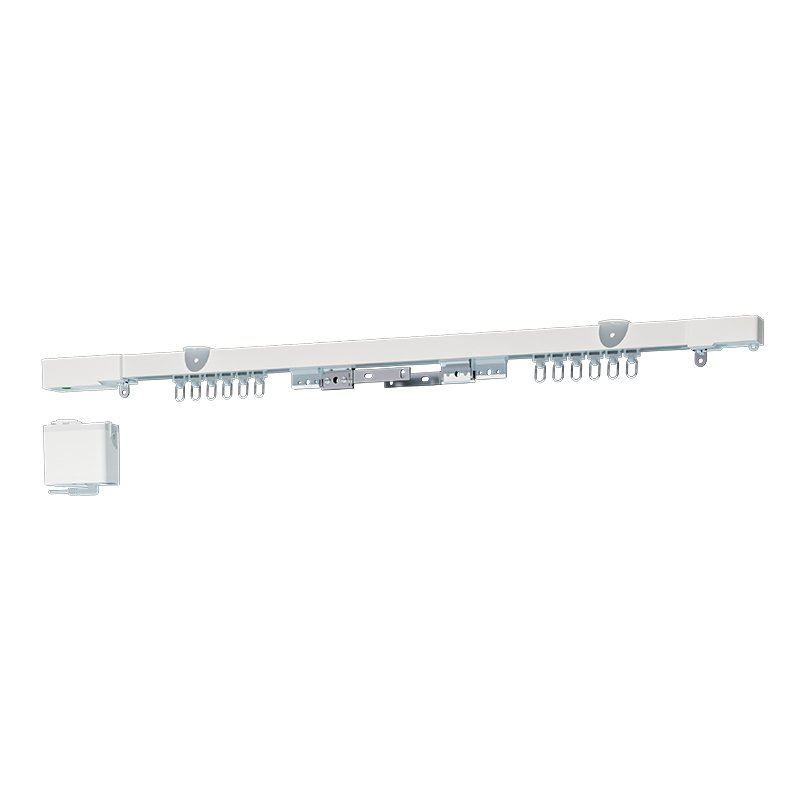
Both mounting arrangements are available and the bracket type is chosen with the installation, not after it. Ceiling mount is the usual answer for a curtain wall or a recessed detail; wall mount is used where the ceiling is not available or where the track sits behind a valance.
Bracket spacing follows the span and the load. On a long run the spacing is the difference between a track that stays level and one that sags in the middle after a season.
The runners are loop gliders that hang below the profile and take the curtain hooks. Where a project already has hooks, the glider is matched to them rather than the other way round — send a sample hook and we will confirm the match before the order.
Curtain tape, hook type and glider spacing are agreed at quotation, because they decide how the curtain folds when it is open, and that is a visual decision the client notices even if they never think about the track.
The motor is the constant; the controller is the variable. The drive can be supplied with the control arrangement the project asks for, and that is settled at quotation rather than assumed from a photograph.
Say what the room needs — a handset, a wall switch, a module that joins the building’s system — and it is specified with the track. We would rather ask than ship a controller that does not fit the wiring that is already in the wall.
This motor is one of four ways to motorize a window. If you are still deciding between a track-end drive, a clip-on robot, a drive inside the pole and a lit track, the comparison is here: motorized curtains, four ways to do it.
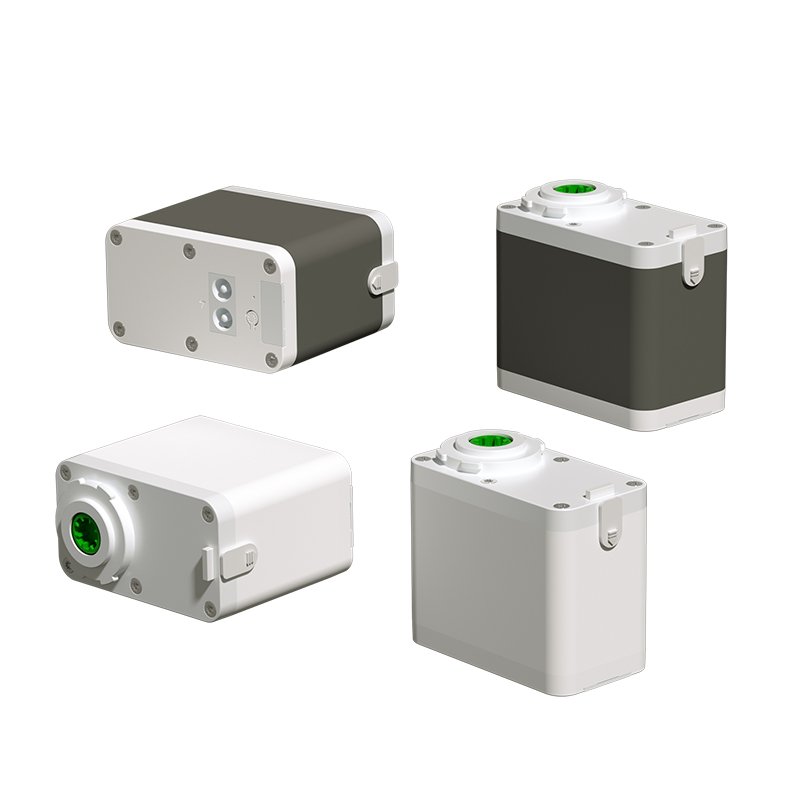
It is a different motor construction, not a different sticker. A brushed motor has carbon brushes that wear as it turns; a brushless motor uses electronics to switch the field instead. The practical result is no brush wear, less heat and quieter running — and a drive whose life is not limited by a consumable part.
No brushes to change. What a long installation needs is what any track needs: the profile kept clean, the gliders free of grit, and the fixings checked at handover. The motor module is replaceable without removing the track — which is most of what an electric curtain track ever asks for in service.
That depends on the fabric and how many layers are on the track, so it is confirmed against the curtain rather than quoted as one figure. Send the fabric, the lining and the span at enquiry stage and the specification comes back sized to it — we would rather size it than guess.
That is what the system is for, but the maximum continuous run is a project question, because it depends on the span, the mounting and the curtain weight. Tell us the opening and we will confirm the profile and the bracket spacing rather than pick from a stock list.
Yes. The drive couples to the end of the profile as a module, so it can be changed without dismantling the track — the reason the design exists in the form it does. A track that outlives its motor is the only kind of electric curtain track worth specifying for a hotel.
Whatever the project specifies: handset, wall switch or a module that joins the building system. The control arrangement is agreed at quotation, so it matches the wiring already in the wall.
Send the opening width, the curtain fabric and lining, the mounting height and whether the ceiling is available. Every electric curtain track enquiry comes back with the profile, the bracket spacing and the drive specified for that opening.
© 2025 R & C Fuzhou Houseware Co., Ltd.
We will arrange for a sales manager to contact you immediately.